Easy & Fluffy Homemade Buttermilk Pancake Recipe
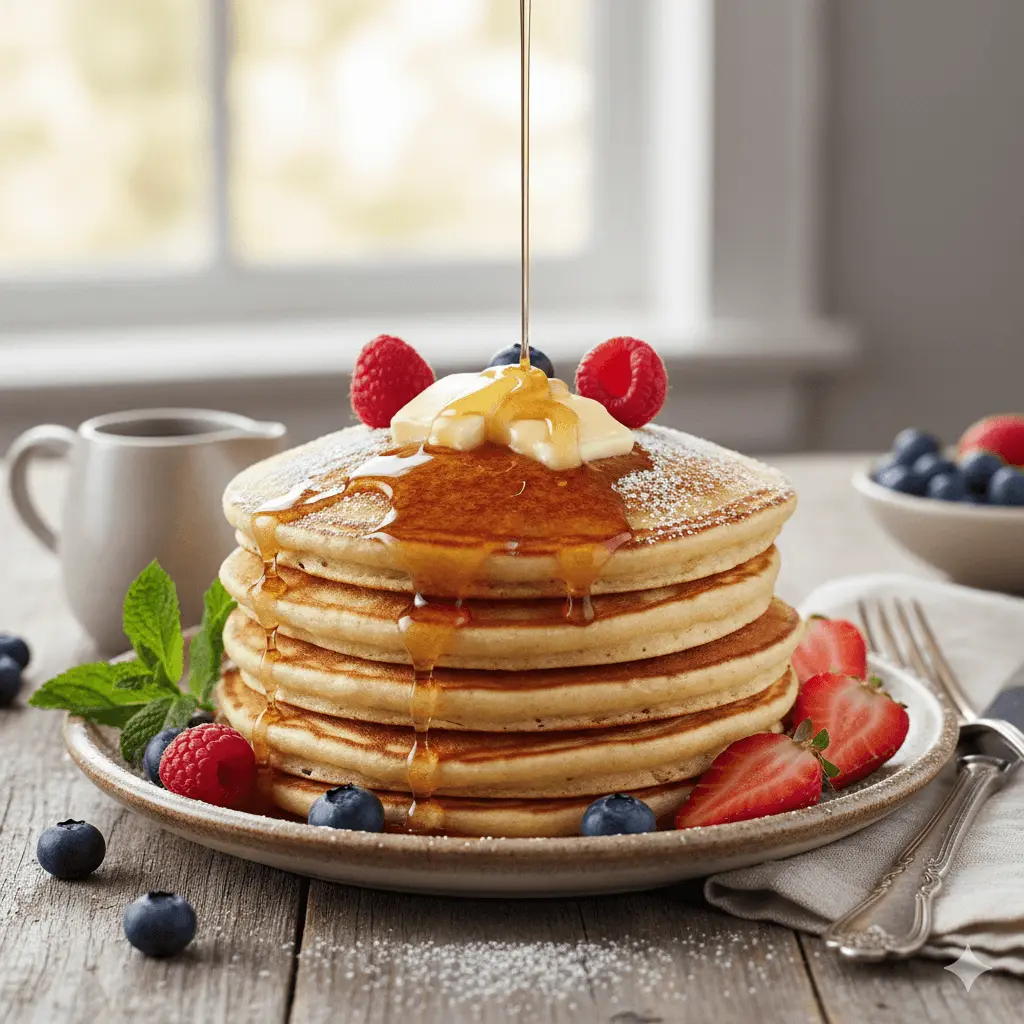
Wake up to the fluffiest homemade buttermilk pancakes you’ve ever tasted. This easy buttermilk pancake recipe creates golden, tender pancakes every single time. No box mix needed. Just simple ingredients and a foolproof technique.
I’ve tested this recipe dozens of times to perfect the ratios. The result is impossibly fluffy buttermilk pancakes with that classic tangy flavor. They’re never dense, never rubbery, always perfect.
10 mins
25 mins
12 pancakes
serves 4
Ingredients for Quick Buttermilk Pancake
DRY INGREDIENTS :
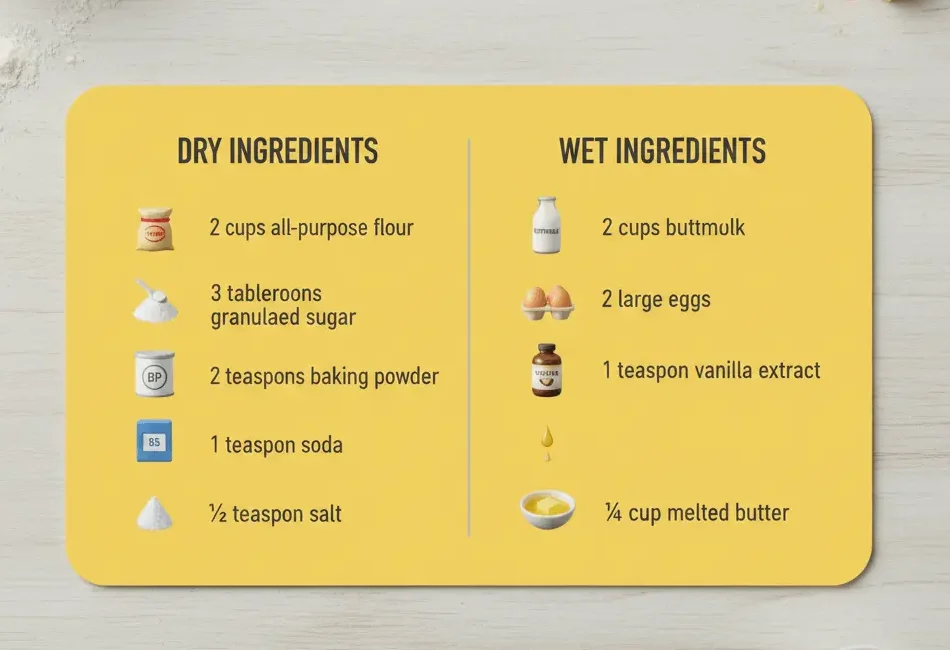
WET INGREDIENTS :
Instructions
Ingredient Substitutions & Alternatives
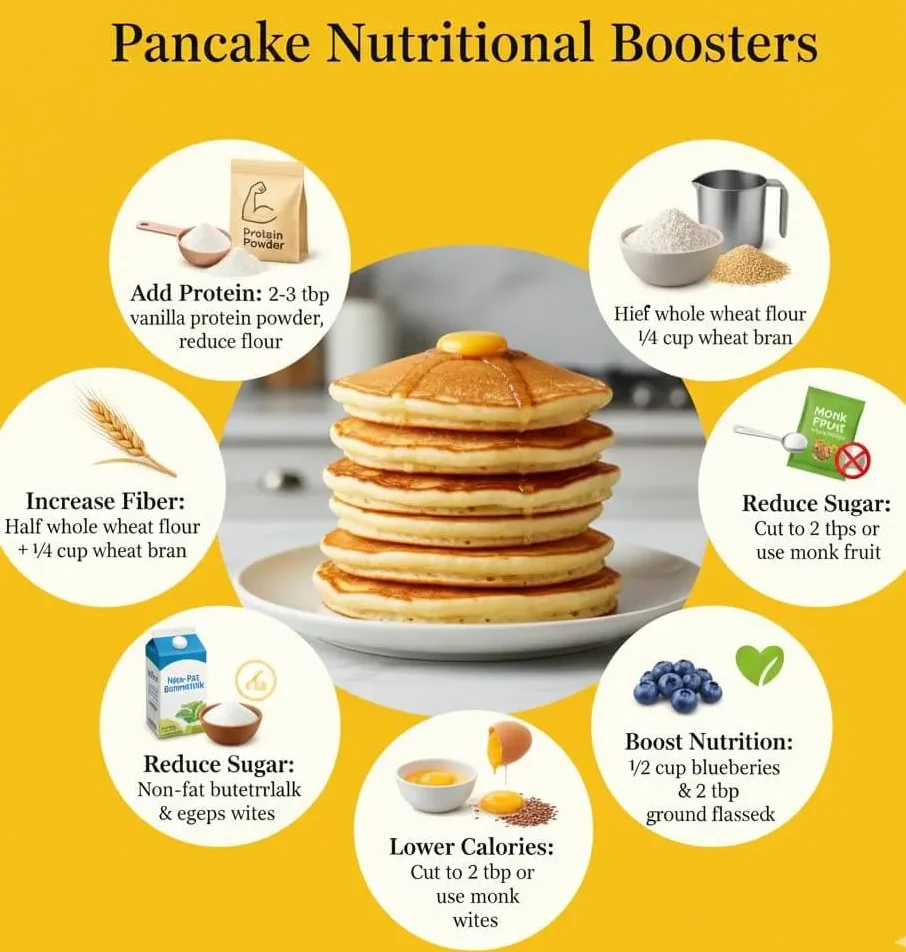
Flour Options: Whole wheat can replace half the all-purpose flour. Add 2 tablespoons of extra buttermilk since whole wheat absorbs more liquid. Gluten-free blends work using a 1:1 ratio.
Sugar Swaps: Brown sugar adds molasses notes. Honey works, but reduce buttermilk by 1 tablespoon. Coconut sugar provides a lower glycemic option.
Butter Alternatives: Coconut oil works for dairy-free pancakes. Vegetable oil functions but lacks butter’s rich flavor.
Egg Replacements: Use 1 tablespoon ground flaxseed plus 3 tablespoons water per egg. Let it sit for 5 minutes before using. Applesauce works too, at ¼ cup per egg.
Buttermilk Pancake Recipe Without Buttermilk
Don’t worry if you have no buttermilk. There is also a Substitute for this. Add 2 tablespoons of white vinegar or lemon juice to a 2-cup measuring cup. Fill to the 2-cup line with milk. Stir and wait 5 minutes until slightly thickened. You can also mix 1 cup plain yogurt with 1 cup milk. Whisk until smooth buttermilk pancake recipe makes it shape .
Important note: homemade substitutes are thinner than real buttermilk. Start with 1¾ cups and add more gradually. Your batter should be thick but pourable. Real buttermilk gives the best results. A quart costs about $3 and keeps for weeks.
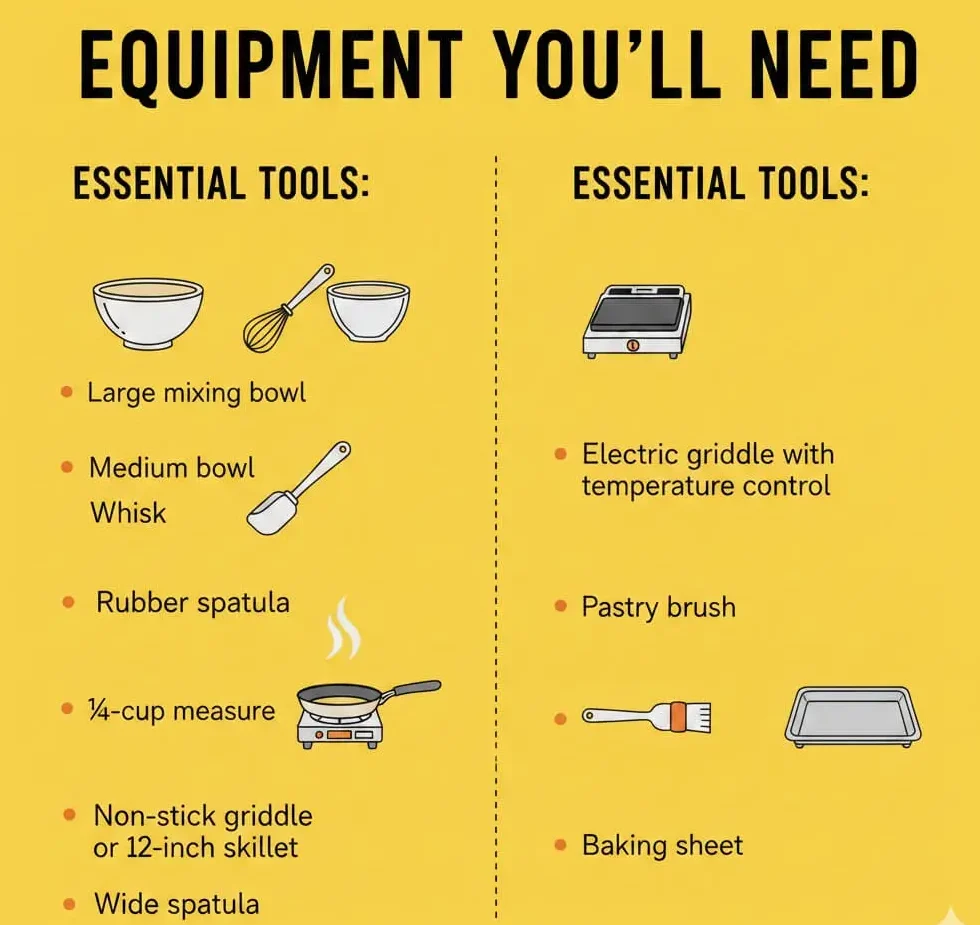
Equipment You’ll Need
Essential Tools :
Essential Tools :
Griddle vs Pan: Electric griddles provide even heat and a large cooking surface. Cast iron creates beautiful browning but needs proper preheating. Non-stick skillets work great for beginners. Choose what you have and preheat it well.
Why is this the Best Buttermilk Pancake Recipe?
How to Make Buttermilk Pancakes? ( Step-by-Step )
Follow these steps for perfect fluffy buttermilk pancakes.
Mix the Batter
Whisk dry ingredients thoroughly in your large bowl. It takes 30 seconds. Then mix wet ingredients in a separate bowl until smooth. Buttermilk, eggs, and vanilla should be well combined.
Make a well in the dry ingredients. Pour the wet mixture into the center. Drizzle melted butter over the top. Use a rubber spatula to fold the mixture with broad strokes. Bring the dry ingredients up from the bottom. Stop when you no longer see large flour pockets.
Cooking Your Pancakes to Perfection
Heat your griddle to medium. Test the temperature by flicking water droplets on the surface. They should dance around before evaporating. Add a small pat of butter. Spread evenly with a paper towel. Butter should sizzle gently, not brown immediately.
Pour ¼ cup batter onto the griddle. Don’t spread it. Let it settle naturally into rounds. Leave 2 inches between pancakes. They spread slightly during cooking. Never press down with a spatula. This deflates the air bubbles you worked to create.
When to Flip? Visual Cues to Look For!
Wait for bubbles to form across the entire surface. Watch for bubbles to pop and leave holes that don’t fill back in. This means the batter has set enough. Check that edges look dry and matte, not wet and glossy.
Slide the spatula under the edge and peek. You’ll get a golden brown color. Most pancakes need 2-3 minutes on the first side. The second side cooks faster at 1-2 minutes. Flip only once. Multiple flips make pancakes tough.
How to Keep Pancakes Warm While Cooking?
Preheat oven to 200°F. Place the baking sheet inside to warm. Transfer finished pancakes to a warm sheet in a single layer and don’t stack them yet. Stacking creates steam and soggy bottoms. Keep the oven door slightly open to prevent condensation.
Pancakes stay warm and fluffy for 30 minutes using this method. For quick breakfasts, place a plate over barely simmering water. Stack finished pancakes on a warm plate. Cover loosely with foil.
Pro Tips for Extra Fluffy Buttermilk Pancakes
Making fluffy pancakes is very easy using this buttermilk pancake recipe. Follow these techniques, and you will get the fluffiest results.
The Science Behind Fluffy Pancakes
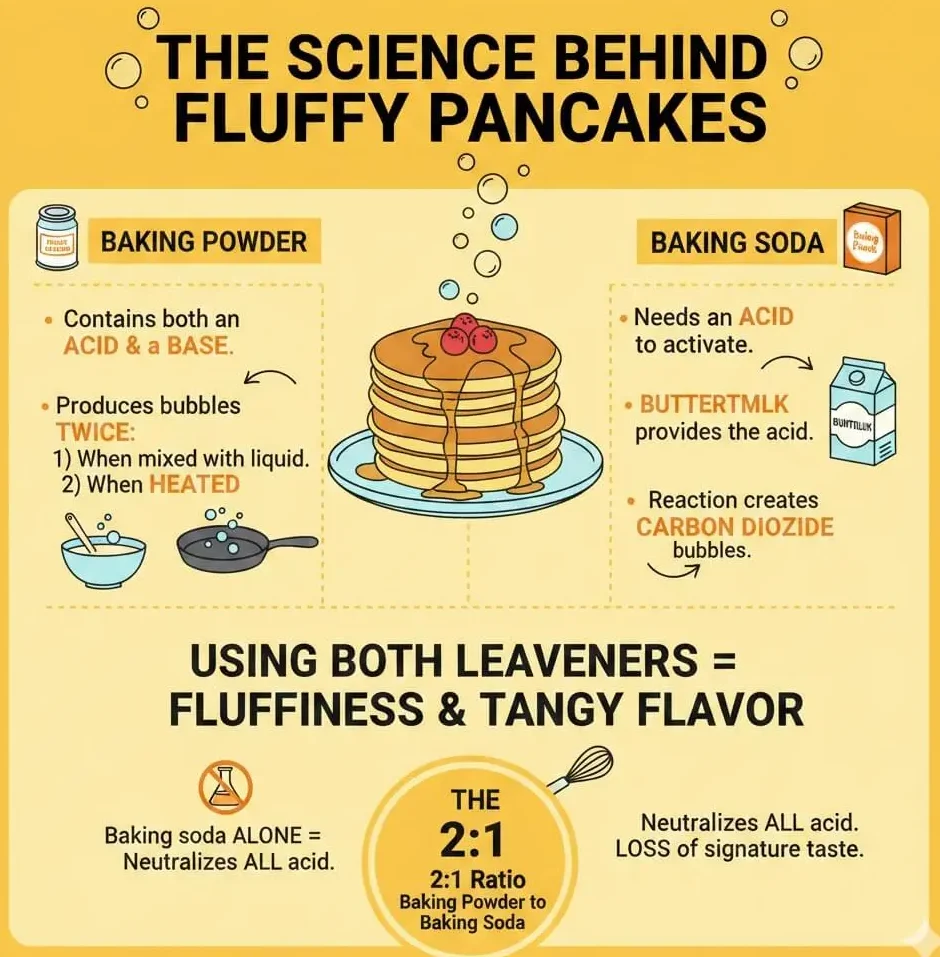
Baking powder contains both an acid and a base. It produces bubbles when mixed with liquid and again when heated. Baking soda needs an acid to activate. Buttermilk provides that acid. The reaction creates carbon dioxide bubbles throughout the batter.
Using both leaveners gives maximum fluffiness while preserving buttermilk’s tangy flavor. Baking soda alone would neutralize all the acid. You’d lose that signature taste. The 2:1 ratio of baking powder to baking soda is the sweet spot.
Temperature Control for Even Cooking
Medium heat is your target. About 350°F on the electric griddle. Too hot burns exteriors before insides cook. Too cool makes pale, dense pancakes. Your first pancake is a test. Lower the heat if it’s too dark and increase slightly if it’s too pale after 3 minutes.
Don’t Overmix
Overmixing develops gluten strands, and it makes bread chewy. Proper batter looks lumpy like cottage cheese. Small flour lumps are visible throughout. Maybe some flour streaks remain.
These lumps hydrate during resting and cooking. By the time pancakes hit the griddle, the batter has smoothed naturally. Use a rubber spatula for final mixing, not a whisk. Make 12-15 gentle folds. Stop immediately when large dry pockets disappear.
Resting the Batter for Better Results
Five to ten minutes of rest transforms this buttermilk pancake recipe as the flour hydrates and the batter thickens. Baking powder and soda start their chemical reactions, and bubbles form throughout. All flavors meld together. Don’t stir again after resting.
Griddle Seasoning and Butter Technique
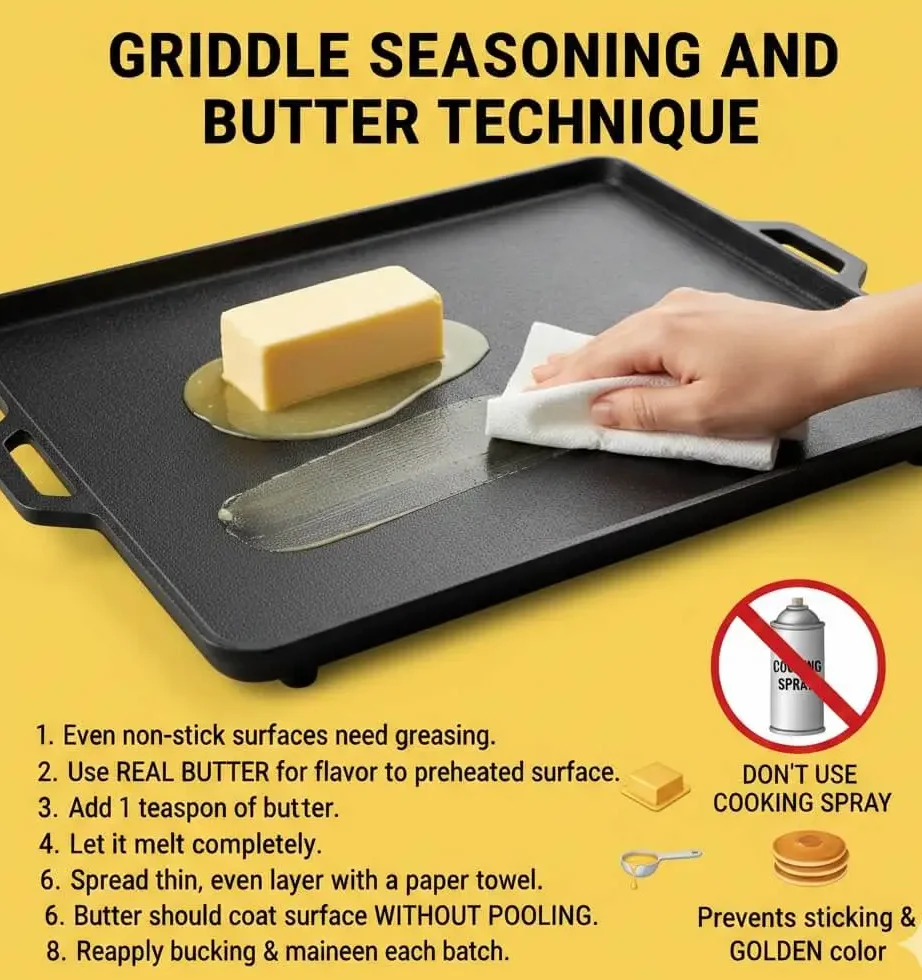
Even non-stick surfaces need greasing. Use real butter for flavor. Don’t use cooking spray; it burns and tastes artificial. Add 1 teaspoon of butter to the preheated surface, and let it melt completely. Spread thin, even layer with a paper towel.
Butter should coat the surface without pooling. Reapply butter between each batch. This prevents sticking and maintains ga olden color.
Troubleshooting Common Pancake Problems
Why Are My Buttermilk Pancakes Flat or Dense?
Flat pancakes usually mean you overmixed the batter, your leavening agents are old, you added too much liquid, or your heat is wrong. Mix until just combined and leave those lumps. Test your baking powder in hot water—it should fizz like crazy. If not, toss it. Keep your batter thick like a milkshake and cook on medium heat for 2-3 minutes per side.
Why Do My Pancakes Taste Bitter?
Bitter pancakes come from too much baking soda, old flour, or burnt butter. Measure your baking soda carefully and level it off with a knife. Smell your flour before using it—fresh flour smells neutral or slightly sweet, never musty. Keep your heat lower so butter foams gently instead of browning right away.
How to Fix Burnt Outside, Raw Inside Pancakes?
Burnt outside with raw inside happens when your heat is too high, batter is too thick, pancakes are too large, or you flip too early. Reduce the heat to medium, where pancakes take 2-3 minutes per side, not 30 seconds. Thin the batter with buttermilk one tablespoon at a time, stick to ¼ cup portions, and wait for bubbles to pop before flipping.
Why Are My Pancakes Sticking to the Pan?
Pancakes stick when you don’t grease enough, your pan isn’t hot enough, you flip too early, or you’re using cooking spray instead of real butter. Fix this by adding butter between each batch and preheating your pan for at least 5 minutes. Wait until the bottom fully sets before flipping, and always use real butter instead of cooking spray for better results.
Why Is My Pancake Batter Too Thick or Too Thin?
If your batter is too thick, add buttermilk 1 tablespoon at a time until the batter slowly pours from the ladle. And if it’s too thin, whisk in flour 1 tablespoon at a time until thickened. Perfect batter holds soft peaks briefly when lifted with a spoon.
How to Fix Rubbery or Tough Pancakes?
Rubbery pancakes come from overmixing, too much flour, cooking too long, or not enough fat. Fix this by mixing until just combined, using the spoon-and-level method for flour, cooking only 2-3 minutes per side, and using the full ¼ cup melted butter.
Buttermilk Pancake Variations & Add-Ins
Not all people want the same tastes. Everybody loves something different. You can transform this basic buttermilk pancake recipe into different flavors.
Blueberry Buttermilk Pancakes
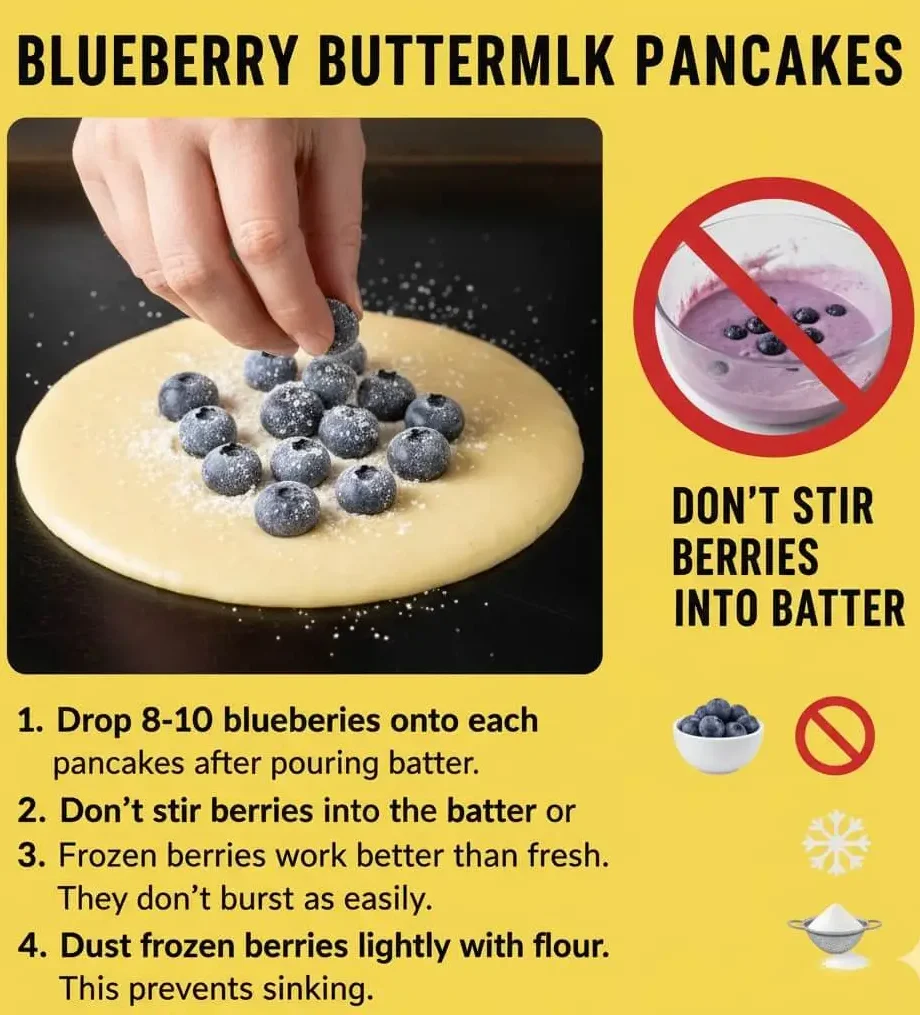
Drop 8-10 blueberries onto each pancake after pouring batter. Don’t stir berries into the batter or everything turns purple. Frozen berries work better than fresh. They don’t burst as easily. Dust frozen berries lightly with flour. This prevents sinking.
Chocolate Chip Buttermilk Pancakes
Stir ½ to ¾ cup mini chocolate chips into the finished batter. Mini chips distribute better than regular size. Use semi-sweet or dark chocolate. Milk chocolate is too sweet. Add extra chips on top right after pouring for melty pockets.
Old Fashioned Buttermilk Pancakes Style
Use 1¾ cups buttermilk instead of 2 cups for a thicker batter. This creates tall, hefty diner-style pancakes. Pour ⅓ cup batter per pancake instead of ¼ cup for bigger flapjacks. Add an extra tablespoon of melted butter for a richer flavor.
Banana Buttermilk Pancakes
Mash 1 very ripe banana into the wet ingredients before combining with the dry. Riper bananas give better flavor. You can also slice a banana and place rounds directly on pancakes after pouring. Reduce buttermilk by 2-3 tablespoons.
Whole Wheat Buttermilk Pancakes
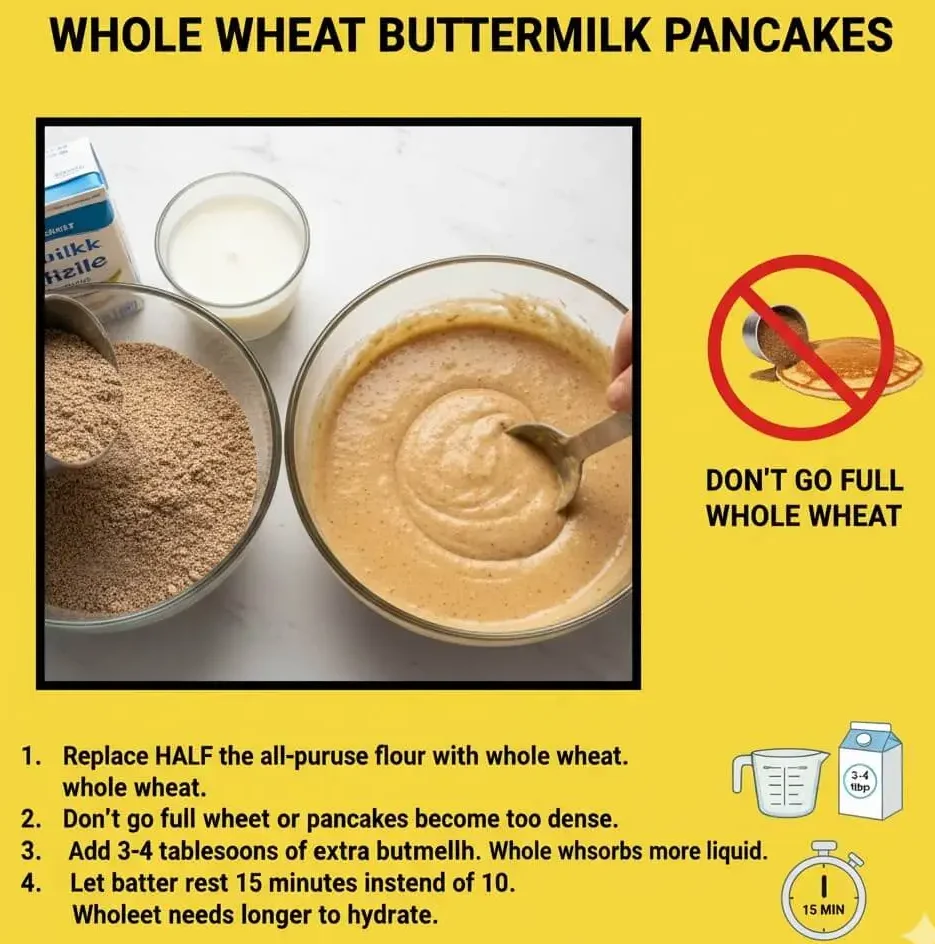
Replace half the all-purpose flour with whole wheat. Don’t go full whole wheat or pancakes become too dense. Add 3-4 tablespoons of extra buttermilk because whole wheat absorbs more liquid. Let batter rest 15 minutes instead of 10. Whole wheat needs longer to hydrate.
Best Toppings & Serving Ideas for Buttermilk Pancakes
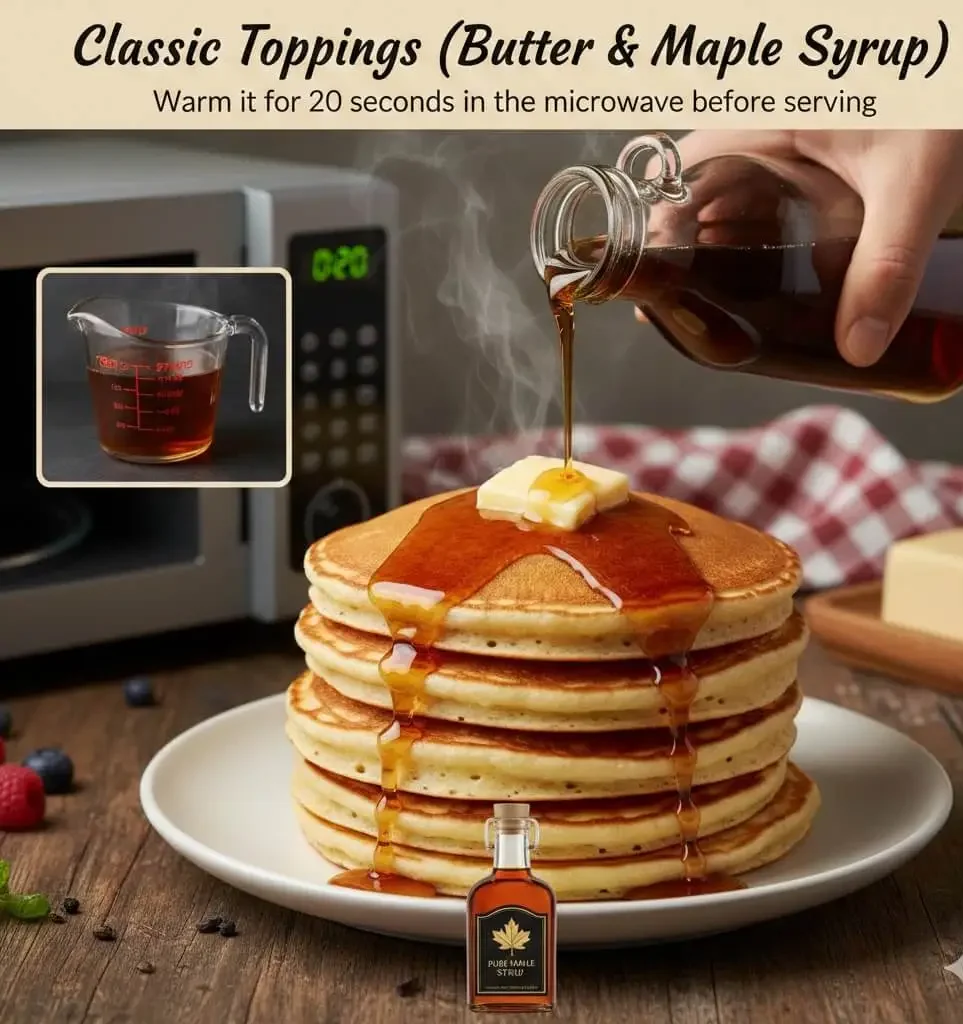
Classic Toppings ( Butter & Maple Syrup )
Place a pat of real butter on a hot stack and watch it melt into creamy rivers. Use pure maple syrup, not imitation. Warm it for 20 seconds in the microwave before serving. Drizzle syrup over the entire stack, and let it cascade down the sides.
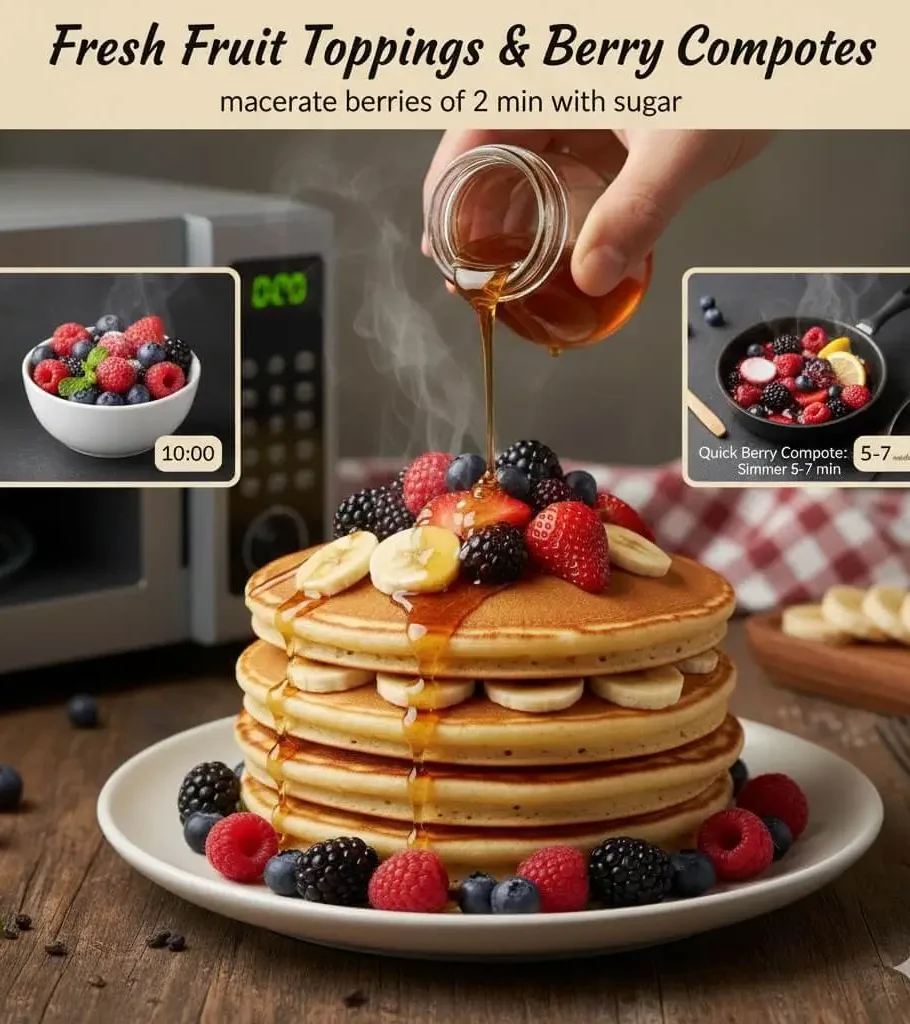
Fresh Fruit Toppings & Berry Compotes
Top with mixed berries. Macerate them with sugar 10 minutes before serving for extra juice. Make a quick berry compote by simmering 2 cups of berries with ¼ cup of sugar and 1 tablespoon of lemon juice for 5-7 minutes. Arrange banana slices between layers and on top. Drizzle with honey.
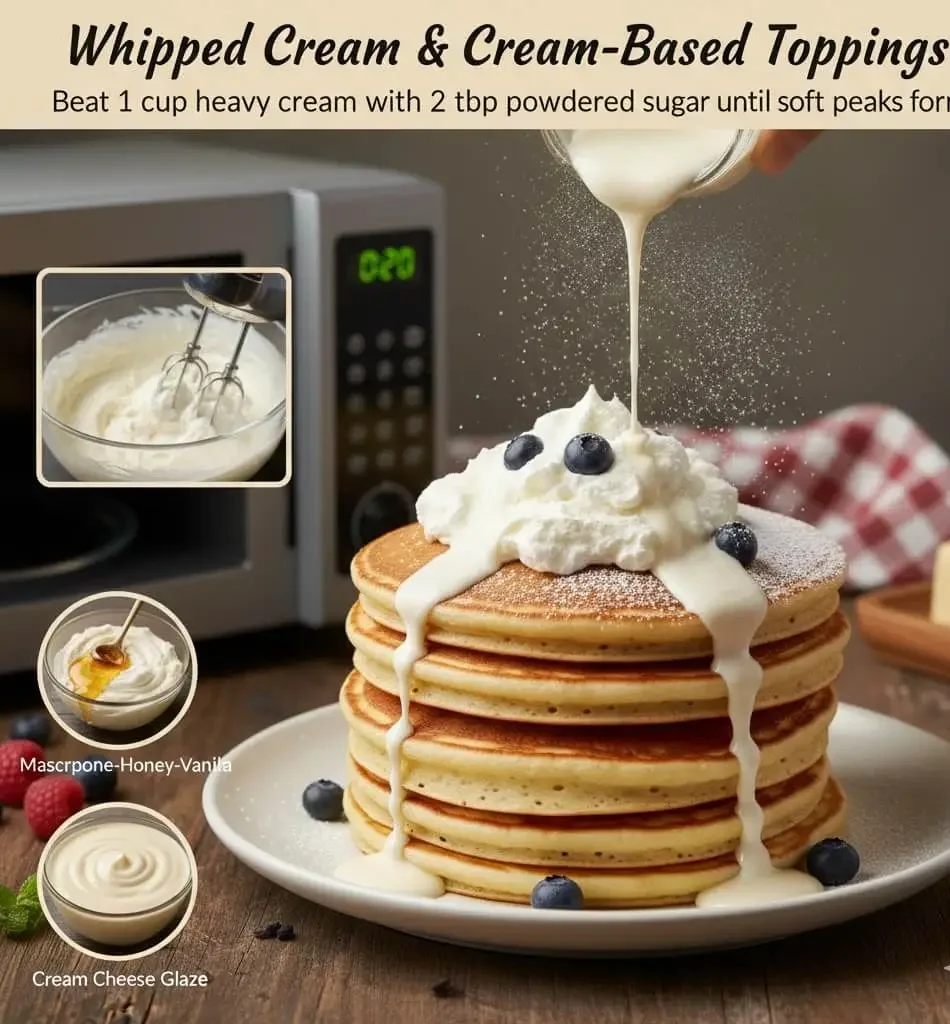
Whipped Cream & Cream-Based Toppings
Beat 1 cup heavy cream with 2 tablespoons powdered sugar until soft peaks form. Mix mascarpone cheese with honey and vanilla for an ultra-rich topping. Whisk softened cream cheese with powdered sugar and milk until pourable for cream cheese glaze.
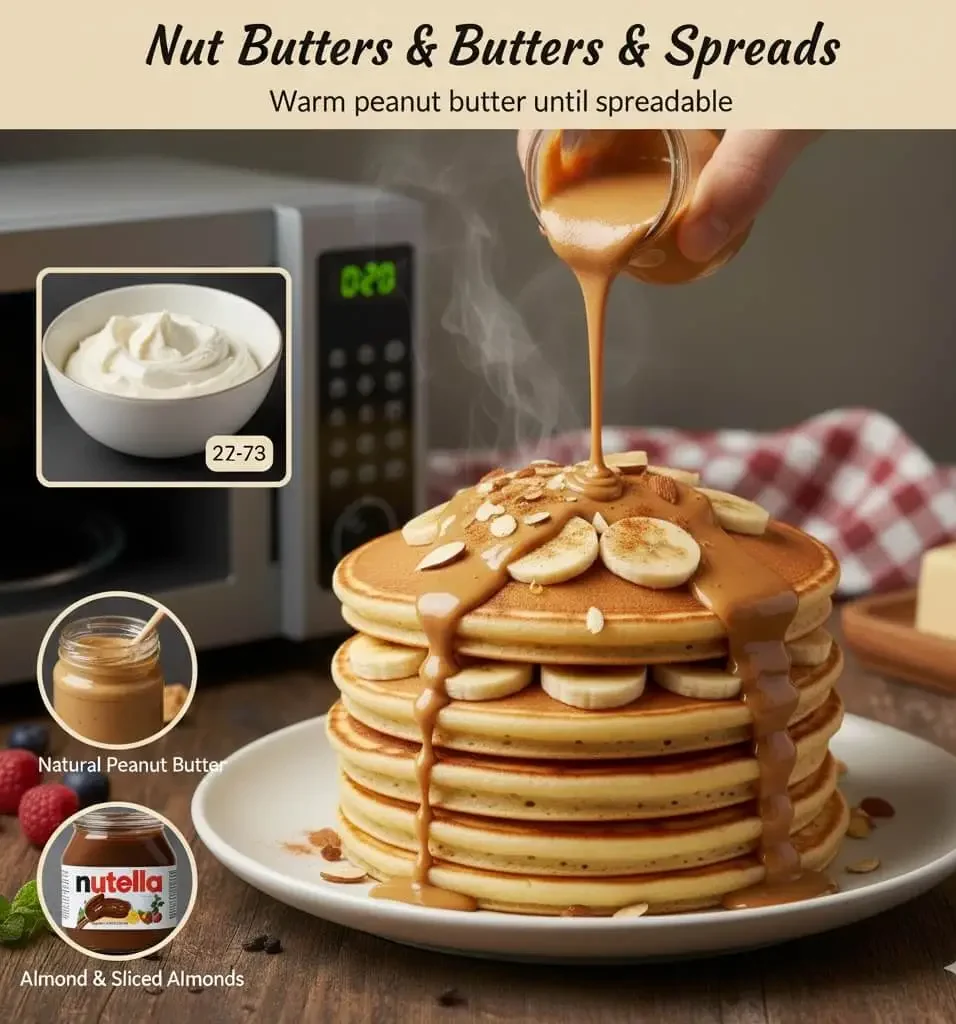
Nut Butters & Spreads
Warm the natural peanut butter until spreadable. Drizzle over pancakes with sliced bananas and honey. Spread almond butter between layers. Top with sliced almonds and cinnamon. You can also try Nutella between pancakes while still warm for a chocolate-hazelnut indulgence./
Dessert-Style Toppings
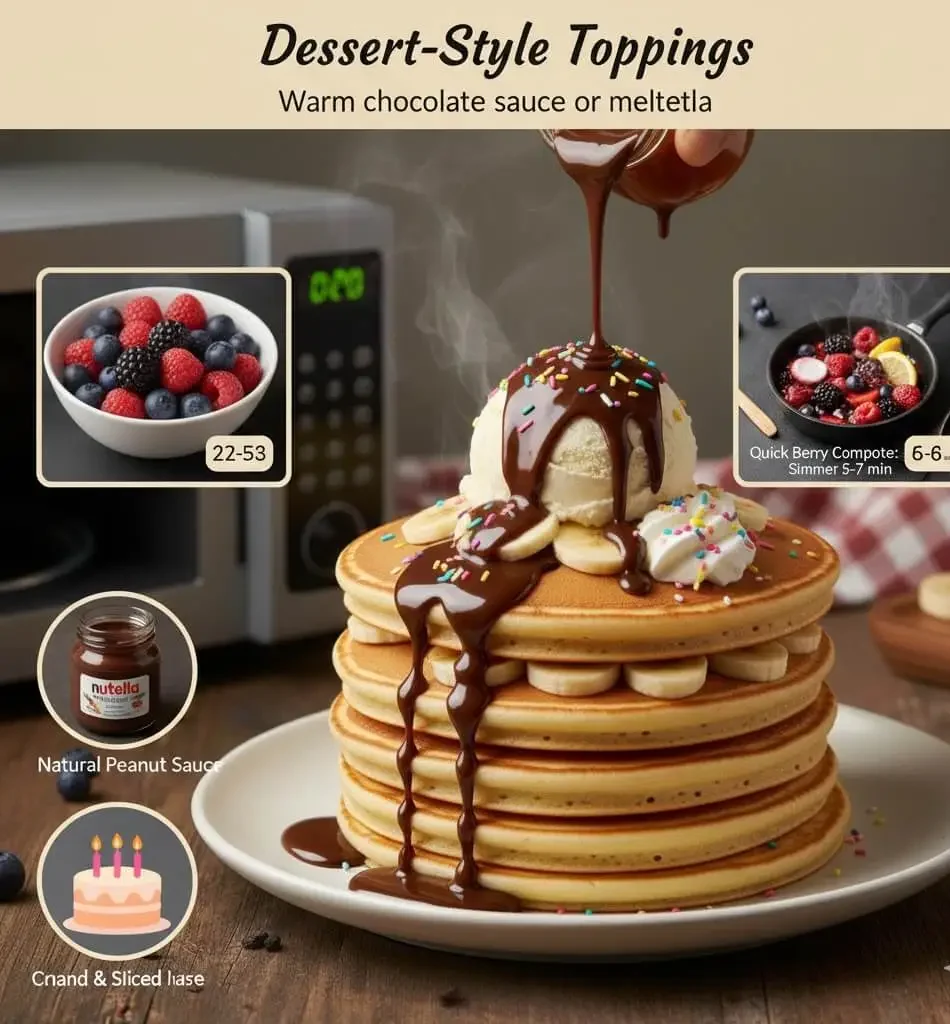
Top with vanilla ice cream and drizzle chocolate sauce. It’s a birthday breakfast perfection. Warm chocolate sauce or melted Nutella with whipped cream creates a breakfast sundae.
Savory Pancake Topping Ideas
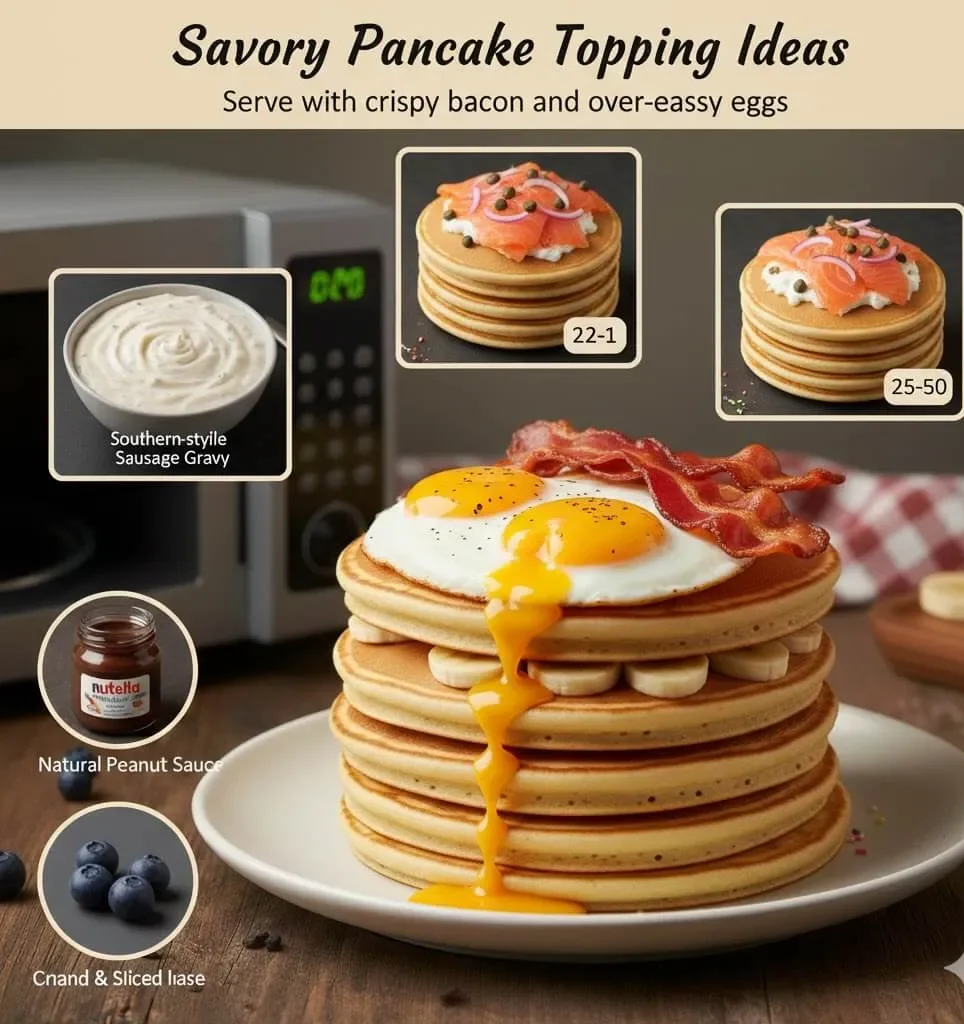
Serve with crispy bacon and over-easy eggs, and let the yolk run into the pancakes. Try Southern-style sausage gravy over pancakes for a hearty breakfast. Top with smoked salmon, cream cheese, capers, and red onion for a brunch dish.
Storage, Freezing & Meal Prep
How to Store Buttermilk Pancakes?
Cool pancakes completely before storing, about 20-30 minutes at room temperature. Stack with parchment paper between each pancake to prevent sticking. Place in an airtight container, and store in the refrigerator up to 5 days.
How to Freeze Buttermilk Pancakes?
You can freeze pancakes, and it works perfectly for meal prep. Arrange cooled pancakes on a parchment-lined baking sheet, and freeze 1-2 hours until solid. Transfer frozen pancakes to a freezer bag, and remove as much air as possible.
Best Methods to Reheat Pancakes
Microwave: Place 1-2 pancakes on a plate. Cover with a damp paper towel. Heat 20-30 seconds for refrigerated, 45-60 seconds for frozen.
Toaster: Pop frozen or refrigerated pancakes directly in the toaster. Use the medium setting. Toast until heated and slightly crispy.
Oven: Preheat to 350°F. Arrange pancakes on a baking sheet. Cover loosely with foil. Bake 5-10 minutes until warm.
Skillet: Heat a non-stick pan over medium-low. Add a tiny pat of butter. Heat pancakes 1-2 minutes per side.
Make-Ahead Pancake Batter Tips
Mixed batter can be refrigerated for 2 hours, But Beyond that leave power decreases. Another Better strategy is to mix the dry ingredients and store them at room temperature for up to 1 week. Measure wet ingredients and refrigerate overnight. Combine in the morning. This takes 2 minutes and produces fluffier results than an overnight batter.
Nutrition Information of Buttermilk Pancake
Buttermilk Pancake Calories & Macros
How to Make Healthier Buttermilk Pancakes
Conclusion
This buttermilk pancake recipe delivers perfect results every single time. The secret lies in simple technique and quality ingredients. Don’t overmix that batter. Let it rest, and cook over medium heat. These three rules guarantee fluffy, golden pancakes.
Whether you’re feeding your family on a lazy Sunday or meal prepping for busy weekday mornings, this recipe has you covered. The variations let you customize to your taste, and the storage tips make breakfast convenient all week long.